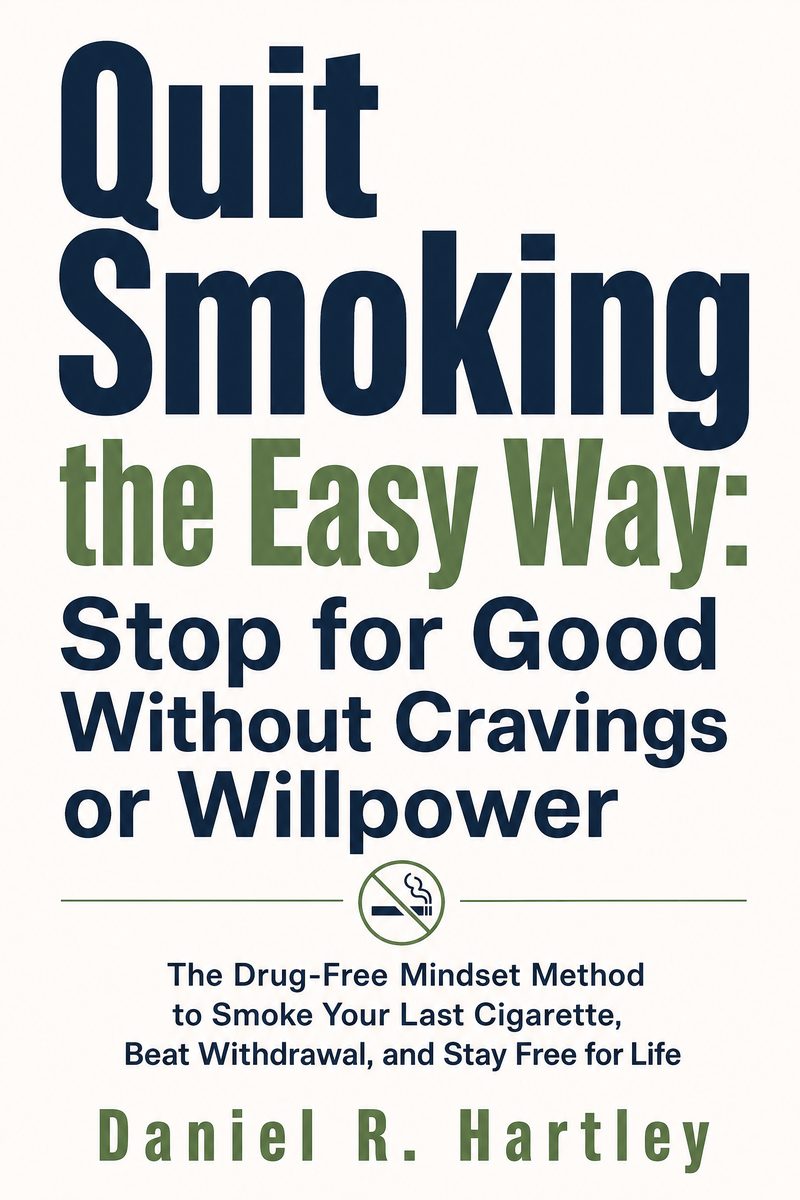
Quit Smoking the Easy Way: Stop for Good Without Cravings or Willpower
The Drug-Free Mindset Method to Smoke Your Last Cigarette, Beat Withdrawal, and Stay Free for Life
★★★★★
The Drug-Free Mindset Method to Smoke Your Last Cigarette, Beat Withdrawal, and Stay Free for Life
★★★★★A drug-free, mindset-first method that helps lifelong smokers quit without cravings dominating their lives and without relying on willpower, so they can smoke their last cigarette feeling relieved instead of deprived and stay free for good.
You have tried to quit before. Maybe three times. Maybe a dozen. Patches, gum, cold turkey, apps, vapes, sheer gritted-teeth willpower, you have done it all, and every time the cravings won and you ended up right back where you started, feeling like a failure who simply cannot stop.
Here is the truth no one told you: you did not fail because you are weak. You failed because you were taught to quit the hard way, the way that guarantees misery, makes a cigarette look like a friend you are losing, and turns every craving into a battle you eventually lose.
Quit Smoking the Easy Way flips the entire script. Written by a former twenty-two-year smoker who failed eleven times before quitting for good, this book does not ask you to suffer, fight, or rely on willpower you have already proven runs out. Instead, it dismantles the mental traps that keep you hooked, exposes the illusion that smoking gives you anything at all, and walks you step by step to the moment you smoke your final cigarette feeling free rather than deprived.
No patches. No gum. No pharmaceuticals. No lectures about how bad it is for you, you already know. Just a clear, drug-free method, backed by how nicotine addiction actually works, that handles cravings, triggers, and the dangerous first days with a concrete day-by-day playbook.
If you are skeptical, good. Keep smoking while you read if you want to. By the last chapter, you may simply find that you do not want to anymore.
Inside you will discover how to see through the biggest lie smoking ever told you, why willpower sabotages you and what to use instead, how to defuse cravings in ninety seconds, how to survive coffee, stress, meals, and a few drinks without lighting up, how to handle a slip without spiraling into full relapse, and how to become someone who genuinely no longer wants a cigarette. This is the last quit-smoking book you will ever need.
I did not quit because I finally found enough willpower. I quit because I finally stopped believing the lie that I was giving anything up. The day a cigarette became worthless to me was the day I was free, and I have stayed free ever since.
Reader bonus
Get 3 hand-picked ebooks that pair with this book’s topic. They’re delivered by email with your purchase and added to your MyBooks library.
Continue to checkout to add the full 3-book companion bundle for just $9.99.
Showing 601–620 of 697 reviews
Quitting smoking felt impossible while managing work and family stress until I found this book. It doesn’t sugarcoat the challenge but instead offers a practical, mindset-based method that addresses the emotional and physical hurdles without relying on sheer willpower. The strategies are straightforward, focusing on natural ways to beat cravings and rewire your identity as a non-smoker. I especially appreciated the genuine tone—no lectures, just honest support that fits into a hectic schedule. For any parent juggling life’s demands and wanting a sustainable quit plan, this book is a compassionate and effective guide.
As a first-time entrepreneur juggling countless responsibilities, I needed a quitting method that was straightforward and didn't rely on complicated therapies or willpower alone. This book offers a fresh, drug-free approach focused on shifting your mindset rather than chasing traditional solutions. It skips over the usual psychological jargon and instead provides clear, actionable steps to finally smoke your last cigarette. While it doesn't delve deeply into scientific studies or medical treatments, the real strength lies in its practical survival strategies and honest look at what quitting feels like. For anyone struggling with smoking addiction who wants a simple, down-to-earth guide without fancy prescriptions, this could be a valuable resource. It's concise, easy to digest, and may just be the extra tool you need to break free for good.
As someone recently retired, I found this book refreshingly honest and compassionate about the struggles of quitting smoking. It doesn’t just push willpower but offers practical mindset tools that feel doable and real. The way it guides you through the first days and helps you understand why past attempts failed was exactly what I needed to finally feel in control and hopeful about staying smoke-free.
As a full-time freelancer, maintaining focus and energy is crucial for my work, so smoking cessation was high on my priority list. While I have already quit smoking, I found this book’s approach to tackling related habits—especially alcohol consumption—to be incredibly valuable. The author’s practical, mindset-driven strategies offered me fresh perspectives on cutting back without relying solely on willpower or feeling deprived. The method’s emphasis on understanding the brain’s role in addiction and offering tools to defuse cravings quickly really resonated with me. Although I am still early in applying these techniques to my drinking habits, I feel empowered and optimistic that this approach will help me gain more control. What I appreciate most is the compassionate tone and the clear guidance that makes the process feel manageable, not overwhelming. Overall, this book is a thoughtful and actionable resource not only for those ready to quit smoking but also for anyone seeking to break free from related habits with confidence. It’s a refreshing alternative to conventional methods, and I’m excited to continue using these insights in my journey.
As a small-business owner, quitting smoking felt like another overwhelming task on my plate. This book’s fresh, mindset-first approach really resonated with me—it doesn’t blame willpower or gloss over the emotional and physical hurdles. Instead, it offers clear, down-to-earth strategies that fit into a hectic schedule and focus on real recovery, not quick fixes. The author’s candid style makes the whole journey feel doable and encouraging. If you want a no-nonsense, supportive guide that goes beyond the usual tough-love quitting advice, this is the one to pick up.
As someone juggling a full-time job and a side hustle, I appreciated how this book gets right to the point without overwhelming you with unnecessary details. It offers a fresh approach that doesn't rely on willpower or medications but instead focuses on changing your mindset to truly stop smoking for good. The author breaks down why traditional methods often fail and provides clear, actionable steps for surviving the toughest moments. While it doesn’t dive deeply into the medical side or use drugs to manage cravings, this method felt like a realistic and manageable option for someone like me who needed a no-fuss strategy. If you’re tired of complicated programs and want a straightforward, drug-free way to quit smoking, this book could be a great addition to your quitting toolkit.
As someone fresh out of college, I found this book truly relatable and down-to-earth. It doesn’t just push willpower, but instead offers a thoughtful mindset shift that felt personal and doable. The step-by-step guidance to manage cravings and the focus on rewiring how I see myself as a non-smoker really stood out. It’s a hopeful and practical read for anyone who wants to quit smoking without feeling overwhelmed or deprived.
I’ve never been a smoker, so at first I wasn’t sure how much this book, focused on quitting smoking, would speak to me. What really drew me in was its honest discussion about habits and cravings, which I suspected could apply to my ongoing struggle with cutting back on my evening drinks. This book offered a mindset-first, drug-free method that felt genuinely different from all the usual willpower-driven advice I’d heard before. The clear, step-by-step guidance on how to recognize triggers and manage cravings without feeling deprived was a revelation. I appreciate how the author dismantles common misconceptions about addiction, which made me rethink my own patterns. Although I’m still early in applying these principles to my drinking, I’m encouraged by the practical strategies and the way the book normalizes setbacks without guilt. Overall, this isn’t just for smokers — if you’re looking for a compassionate, insightful framework to break free from any habit, you’ll find this approach empowering and doable. It’s helping me build confidence that change is possible without relying on sheer willpower, and I’m eager to see where this mindset takes me.
Quitting smoking without sinking money into expensive patches or gum is a relief, and this book delivers that drug-free mindset approach I needed. It doesn’t sugarcoat the struggle but offers clear, practical steps and mindset shifts that actually felt doable instead of overwhelming. The focus on emotional patterns and realistic survival strategies helped me cut through cravings without relying on willpower alone, saving me both frustration and cash. If you’re tired of costly gimmicks and want a grounded, compassionate method to finally quit, this guide is a smart investment in your health and wallet.
After trying so many programs that promised the world but left me struggling, this book felt like a breath of fresh air. It avoids the usual gimmicks and instead focuses on understanding why quitting has been so hard without blaming me. The mindset-based method offers clear, straightforward advice on how to beat cravings and stay smoke-free without relying on sheer willpower. What I appreciated most is how the book keeps things simple and easy to digest, making it a quick read without overwhelming you. If you're tired of the usual advice that never quite sticks, this approach might be the practical tool you need to finally quit and stay free for good.
I never seriously tried to quit before and was skeptical about how a book could help me stop smoking without willpower or cravings. This one completely changed that—I quit just hours after finishing it and haven’t touched a cigarette in over 9 months. The book breaks down all the lies I believed about smoking and explains why cravings aren’t as powerful as I thought. It even helped me understand how nicotine tricks my brain and why relying on willpower is a losing game. Instead of feeling deprived, I felt relieved and confident. It’s like reclaiming a part of my life I didn’t realize was stolen. If you’re fed up with trying to quit the old way, this mindset approach is worth every penny.
As someone who likes to be methodical and thorough when tackling big challenges, I appreciated how this book lays out the quitting process with clarity and realism. Having smoked a pack a day for over a decade, I had tried patches, gum, and cold turkey multiple times with little success. I was skeptical at first, especially about the idea that willpower alone isn’t the answer, but this method reshaped how I thought about quitting entirely. What stood out to me was the way the book addresses the mindset behind smoking—the internal conflict many smokers feel but seldom acknowledge. I realized I wasn’t truly committed to quitting before; I just felt I had to because of health concerns. This book helped me cross that crucial psychological bridge to genuinely want to quit, which made all the difference. The detailed explanations about how nicotine manipulates the brain and why conventional advice often fails were eye-opening. The hour-by-hour survival guide for the first three days was incredibly helpful in planning my quit day. It prepared me for the withdrawal symptoms and cravings, which turned out to be manageable when using the suggested techniques rather than relying on sheer willpower. I also appreciated the practical advice on handling triggers like coffee or stress, and the emphasis on reshaping your identity from smoker to non-smoker. This wasn’t about quick fixes or medication; it was about understanding and changing the relationship with smoking from the ground up. The first month was definitely challenging—I noticed I drank more and had to be vigilant about cravings—but after that initial period, I felt a sense of relief and empowerment I hadn’t expected. The book doesn’t sugarcoat the process but offers a realistic roadmap and a mindset that makes quitting achievable. Overall, this guide is a thoughtful, well-structured resource that respects the complexity of quitting smoking. For anyone serious about stopping for good without relying on drugs or willpower alone, it’s a valuable investment. I’ve recommended it to friends and family who are contemplating quitting, and I’m confident it can help others as much as it helped me.
As a working mom constantly balancing family chaos and a demanding job, quitting smoking felt impossible until I found this book. It’s not just another quit guide—it breaks down the addiction in a way that finally made sense to me, exposing the truth about nicotine and why willpower alone always fails. The drug-free mindset approach means you don’t have to fight cravings hour by hour or feel deprived. What blew me away was how the book lets you keep smoking while you read, easing you into quitting without panic. I smoked my last cigarette feeling relieved, not stressed, and even during tough days, the strategies helped me resist urges and stay smoke-free. Plus, I’m already noticing my energy returning—I even managed a jog with the kids! If you’re juggling a million things like me and want a quit method that respects your busy life and mindset, this is the one to grab.
As a first-time entrepreneur, balancing stress and health is crucial for me. I had tried every quitting aid from patches to gum, but nothing worked long-term—always ended back at cigarettes, relying on sheer willpower that inevitably ran out. This book completely changed my perspective by explaining addiction in a way that made sense and by offering a mindset-driven method rather than pushing quick fixes or nicotine replacements. The first few days were tough, with mood swings and low energy, but the clear guidance and survival strategies helped me push through the hardest moments. Now, several months smoke-free, I feel empowered rather than deprived. The book taught me to reframe cravings and triggers as manageable challenges, not insurmountable battles. It’s not a magic cure, but the step-by-step approach makes quitting realistic and sustainable. I’ve even been able to support close family members through their quitting journeys with these insights. If you’re ready to quit for good without relying on willpower or drugs, this book is a must-have tool.
As someone recently retired and finally ready to quit smoking for good, this book really resonated with me. It breaks down the myths about quitting and shows why relying on willpower alone is a losing battle. I especially appreciated the clear explanation that nicotine withdrawal isn’t just a one-time hurdle—it’s ongoing until you quit, which was eye-opening. The tone is encouraging without sugarcoating, and the humor sprinkled throughout made the journey feel lighter. My only gripe is the occasional plug for related workshops, which felt a bit out of place. Still, it’s a solid read that helped me approach quitting with relief instead of dread. Highly recommend it for anyone wanting to make that last cigarette truly their last.
As a full-time freelancer, my schedule is unpredictable and I often found myself reaching for cigarettes during stressful deadlines or late-night work sessions. I smoked about a pack a day for over a decade and honestly thought quitting was out of reach—especially with a family full of smokers where lighting up felt as normal as breathing. But this book completely shifted my mindset. I didn’t quit the moment I finished the first read, but the concepts stayed with me, playing over in my mind each time I felt that urge to light up. It prepared me mentally in a way no other approach had. Then one chilly evening, while at a friend’s gathering mostly made up of non-smokers, I decided to test myself: what if I just didn’t go outside for a cigarette? The idea of bundling up, interrupting the good vibes, and dragging someone else out in the cold suddenly felt like a real deterrent. I gave myself permission to wait until morning if I really needed it. Morning came, and surprisingly, the craving hadn’t taken over; I kept choosing to delay, hour after hour, and day after day. What amazed me was how quickly the habit lost its grip. I felt empowered rather than deprived. Within a few weeks, the thought of smoking felt foreign. I didn’t gain any weight either; instead, I managed my oral fixation with sugar-free gum and some low-calorie candies, which surprisingly helped curb my appetite during that time. One tip for those who miss the hand-to-mouth ritual: I found a mint-flavored herbal stick helped immensely. Taking deep breaths with it calmed the urge without any nicotine, and I only needed it for about a month post-quit. Since quitting, I traveled to places where smoking is culturally entrenched and everywhere—indoors, outdoors, at every social occasion. It was tough, with fleeting temptations, but this book’s approach made me feel confident and relaxed, unlike past attempts where I felt anxious and fearful of withdrawal. Friends and family noticed how much healthier and happier I appeared, and they were amazed I hadn’t ballooned in weight. I’ve been smoke-free for four months now, and I have this book to thank for giving me a realistic, sustainable path out of smoking without relying on willpower alone. This isn’t a quick fix that guarantees instant success on the first read, but every time you revisit the concepts, they sink deeper and prepare you for lasting change. For anyone struggling in a similar situation, especially those with hectic lives, I can’t recommend this method highly enough. It’s given me freedom, health, and peace of mind.
As a small-business owner, I’m always pressed for time and pretty skeptical about quick fixes. This book’s method caught my eye because it’s all about mindset, not willpower or drugs. I found myself recognizing every excuse I’d used before in its pages, which was eye-opening. Following the step-by-step guidance and talking myself through it made a big difference. I quit smoking the day after finishing it and feel genuinely relieved instead of deprived. This approach fits into my hectic life and finally helped me become a non-smoker—highly recommend giving it a shot!
I’ve tried quitting countless times, juggling my busy corporate job and side projects, but nothing ever stuck. This book gave me a totally different perspective on why I smoked and how to finally stop without feeling like I was depriving myself. The author’s approach to quitting without relying on willpower alone really resonated with me. What surprised me most was that I kept smoking while reading, just as the book suggests, and the desire gradually faded. Understanding the root of my cravings and shifting my mindset made all the difference. After finishing it, I smoked one last cigarette and haven’t looked back since. It’s empowering to feel in control and excited about living smoke-free for good.
After starting smoking again during my last semester, quitting felt impossible. I stumbled upon this book and decided to give it a try. Honestly, I’m not sure if it’s the clear mindset method or just the way it’s written, but once I finished, the urge to light up disappeared completely. It’s a quick read—only took a couple of days despite juggling job applications and social life. Definitely worth it, especially since it doesn’t break the bank.
I was pretty doubtful this book could help me quit after decades of smoking heavily—around 20 years and a massive daily nicotine intake. But I decided to give it a try, and I'm now 21 days nicotine-free! The transformation hasn't been easy, especially the first two weeks, but this method’s approach to mindset rather than willpower made a huge difference. The withdrawal symptoms did hit me at first but quickly became much more manageable as the days passed. What really stood out was how the book addresses why quitting has always felt impossible before and offers practical steps to handle cravings and triggers without feeling deprived. This isn’t about toughing it out but about rewiring how you think about smoking, which felt surprisingly empowering. The detailed survival guide for those critical first 72 hours helped me stay on track hour by hour, and the advice on dealing with common triggers like coffee and stress was spot on. If you’re struggling like I was and think quitting is just too hard, I truly recommend this book. It changed my life and showed me that if I can quit, anyone can. Hang in there—you’ve got this!
“Hartley does something almost no quit-smoking book manages: he removes the fear instead of stoking it. By the time you reach the final-cigarette chapter, quitting feels less like a sacrifice and more like setting down something you never wanted to carry.”
“The genius here is the day-by-day playbook for the first 72 hours and the ninety-second craving drill. This is the practical scaffolding the famous mindset books always left out.”
“Written for the smoker who has failed a dozen times and expects to fail again. It meets that skepticism head-on and dismantles it, page by page.”